
Guide to Safety Management Software (Updated July 2026)


Workplace safety has entered a new era. As organizations become more connected, regulations continue to evolve, and workforces become increasingly mobile, businesses are rethinking how they manage safety. The paper forms, spreadsheets, and filing cabinets that once defined safety programs are giving way to digital solutions that are faster, more accurate, and easier to manage.
That’s why more companies are investing in safety management software to streamline compliance, reduce risk, and create safer workplaces.
Whether you’re responsible for safety in construction, manufacturing, utilities, transportation, warehousing, or another high-risk industry, understanding how these platforms work can help you build a more proactive and effective safety program.
What Is Safety Management Software?
Safety management software is a centralized digital platform that helps organizations manage aspects of workplace health and safety from a single system. Instead of relying on disconnected spreadsheets, paper forms, email chains, and multiple applications, companies can organize their entire safety program in one secure location.
A modern safety management platform typically includes tools for:
- Safety training and certifications
- Workplace and equipment inspections
- Incident and near-miss reporting
- Task assignment functionality
- Hazard identification and observations
- Corrective action management
- Toolbox talks and safety meetings
- Job Safety Analyses (JSAs)
- Employee records and documentation
- OSHA recordkeeping
- Safety dashboards and analytics
By bringing these functions together, organizations gain better visibility into their safety program while reducing administrative work and improving consistency across teams and work locations.
Why Businesses Are Replacing Paper-Based Safety Programs
Many organizations still manage safety using processes that were designed years, or even decades ago. Paper inspection forms, manual filing systems, and spreadsheets can work for small teams, but they quickly become difficult to manage as a business grows.
Common challenges include:
- Lost or incomplete inspection records
- Delayed incident reporting
- Difficulty tracking corrective actions
- Inconsistent documentation between locations
- Time-consuming audit preparation
- Limited visibility into safety performance
These inefficiencies don’t just create extra work, they can also increase compliance risks and make it harder to identify workplace hazards before incidents occur.
Modern workplace safety software eliminates many of these challenges by digitizing safety workflows and giving employees access to real-time information wherever they are working.
From Reactive Safety to Proactive Risk Management
One of the biggest advantages of safety management software is its ability to help organizations prevent incidents instead of simply documenting them afterward.
Traditional safety programs often focus on responding to accidents and maintaining compliance records. Today’s leading organizations are taking a more proactive approach by identifying trends, tracking leading indicators, and addressing hazards before they result in injuries.
For example, if multiple employees report similar hazards during routine inspections, safety managers can identify the pattern, investigate the root cause, and assign corrective actions before the issue becomes a serious incident.
This shift from reactive reporting to proactive risk management is one of the primary reasons businesses are investing in modern safety management platforms.
Mobile Technology Has Changed Workplace Safety
The modern workforce isn’t tied to an office. Employees work on construction sites, factory floors, warehouses, utility projects, and customer locations, making mobile accessibility essential.
Today’s workplace safety software allows employees to:
- Complete inspections from a smartphone or tablet
- Report hazards immediately
- Upload photos and supporting documentation
- Sign toolbox talks electronically
- Complete online safety training
- Receive and close corrective actions in the field
Mobile access encourages employee participation because safety activities become part of the normal workday rather than additional paperwork completed at the end of a shift.
For supervisors, real-time reporting also means hazards can be addressed faster, reducing both operational disruptions and workplace risk.
Simplifying OSHA Compliance and Safety Documentation
Maintaining accurate records has always been a critical part of workplace safety. Whether preparing for an inspection, responding to a customer request, or managing internal audits, organizations need quick access to reliable documentation.
This is where OSHA compliance software and digital safety management platforms provide significant value.
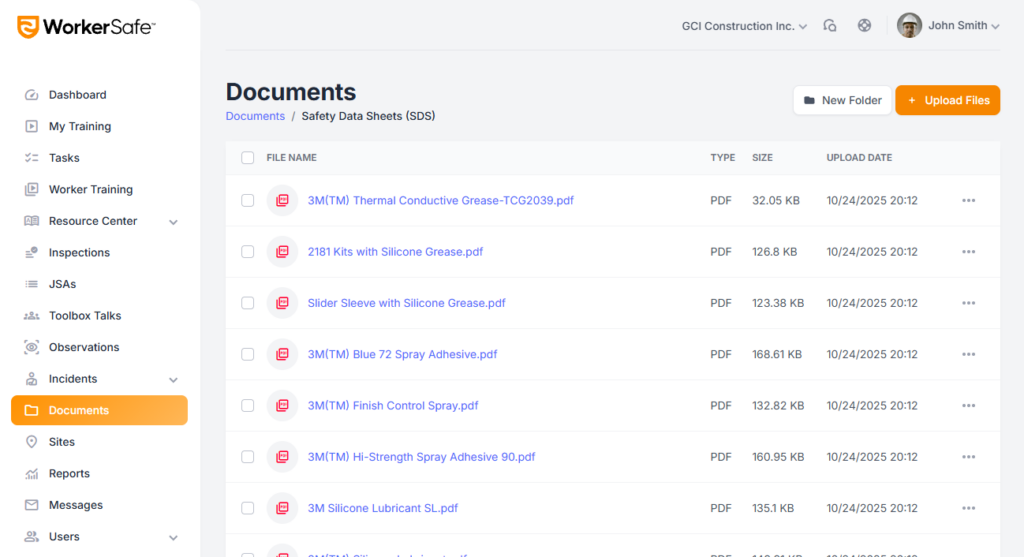
Rather than searching through filing cabinets or shared network folders, teams can instantly access:
- Employee training records
- Equipment and workplace inspection histories
- Incident reports
- Certifications and licenses
- Corrective action records
Centralized documentation not only saves time but also helps organizations demonstrate compliance with internal policies and regulatory requirements more efficiently.
Data Helps Build Safer Workplaces
One of the greatest benefits of safety management software is the ability to transform everyday safety activities into meaningful business insights.
Every completed inspection, hazard observation, incident report, and training course contributes valuable information that helps organizations understand where risks exist and where improvements can be made.
Safety leaders can quickly identify:
- Frequently reported hazards
- Overdue corrective actions
- Training completion rates
- Equipment requiring repair or additional maintenance
- Trends across multiple locations
- Opportunities to improve safety performance
Instead of relying on assumptions, organizations can make informed decisions based on accurate, real-time data.
What to Look for in a Safety Management Platform
Not all safety management software is created equal. As businesses evaluate solutions, they should look for platforms that are easy to use, scalable, and designed for both field and office teams.
Key capabilities include:
- Mobile-friendly inspections and reporting
- Digital forms and customizable workflows
- Safety training management
- Incident and hazard reporting
- Corrective action tracking
- Equipment and workplace inspections
- Employee document management
- Real-time dashboards and reporting
- Secure cloud-based access
- Simple implementation and ongoing support
The best platforms reduce administrative work while making it easier for employees to participate in creating a strong safety culture.
Why Organizations Are Choosing WorkerSafe
As businesses continue modernizing their safety programs, many are looking for an integrated platform rather than a collection of disconnected tools.
WorkerSafe is designed to bring every aspect of workplace safety together in one easy-to-use platform. From digital inspections and hazard reporting to toolbox talks, online safety training, equipment inspections, and employee documentation, WorkerSafe helps organizations simplify compliance while giving managers greater visibility into safety performance.
By replacing manual processes with a centralized safety management platform, businesses can spend less time managing paperwork and more time protecting their people.
The Future of Workplace Safety
Safety management is no longer just about meeting regulatory requirements. It’s about creating safer workplaces, improving operational efficiency, and empowering employees with tools that make safety part of everyday work.
As digital transformation continues across every industry, safety management software has become an essential investment for organizations that want to reduce risk, improve compliance, and build a stronger safety culture.
For companies ready to move beyond paper-based processes, a modern safety management platform like WorkerSafe provides the technology needed to manage safety more effectively, today and into the future.