
Fall Protection Harness Inspections: What to Look For and When It May Be Time to Remove a Harness from Service

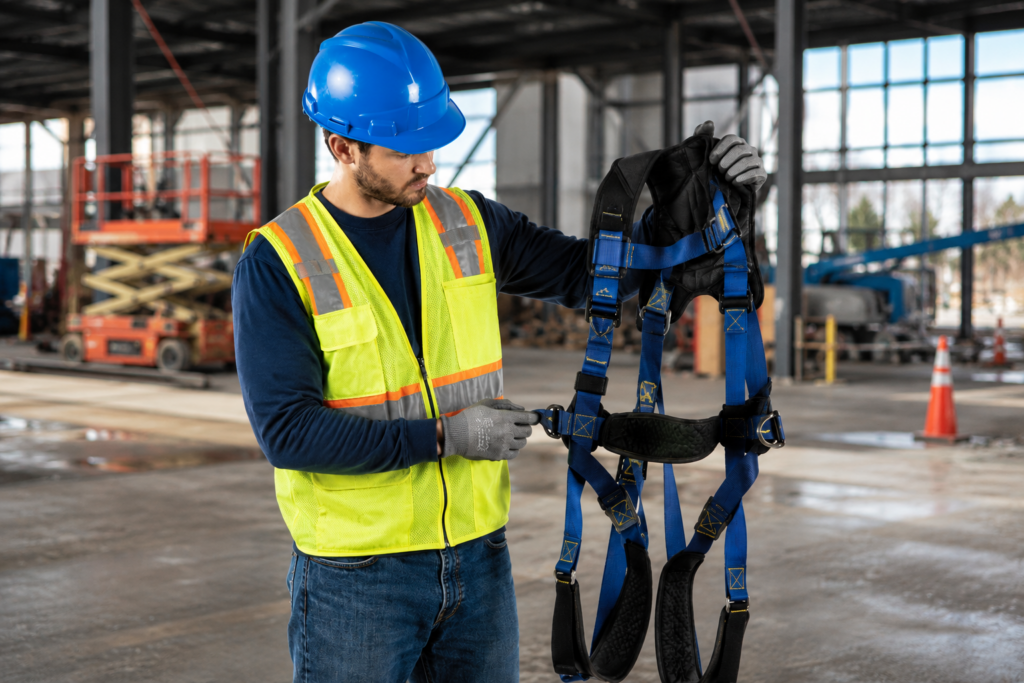
Fall protection equipment is one of the last lines of defense between a worker and a potentially life-changing injury. That’s why routine inspections of safety harnesses are so important.
Most employers understand the need to inspect fall protection equipment, but many still have questions about what they should be looking for and when a harness should be removed from service.
The answer isn’t always black and white. Every manufacturer provides specific inspection criteria for its equipment, and OSHA requires that personal fall protection equipment be inspected before each use. However, knowing what to look for and having a consistent inspection process is crucially important.
Why Harness Inspections Matter
Fall protection harnesses are designed to withstand tremendous forces during a fall. Even so, exposure to daily wear, harsh environments, chemicals, sunlight, and improper storage can gradually reduce the serviceability of the equipment. Routine inspections help identify damage before a worker relies on the harness in a critical situation.
Just as importantly, regular inspections reinforce a culture where employees understand that safety equipment should never be taken for granted.
Who Should Inspect a Safety Harness?
A good fall protection program typically includes multiple levels of inspection.
Employees should inspect their harness before every use, looking for obvious signs of damage, wear, and other deterioration, and remove defective components from service. In addition, many organizations schedule periodic documented inspections by a competent person in accordance with the manufacturer’s recommendations and their own safety program.
Having both daily user inspections and scheduled documented inspections helps reduce the chance that damaged equipment remains in service.
What Should You Look For?
While inspection procedures vary slightly by manufacturer, there are several areas that deserve careful attention.
Webbing
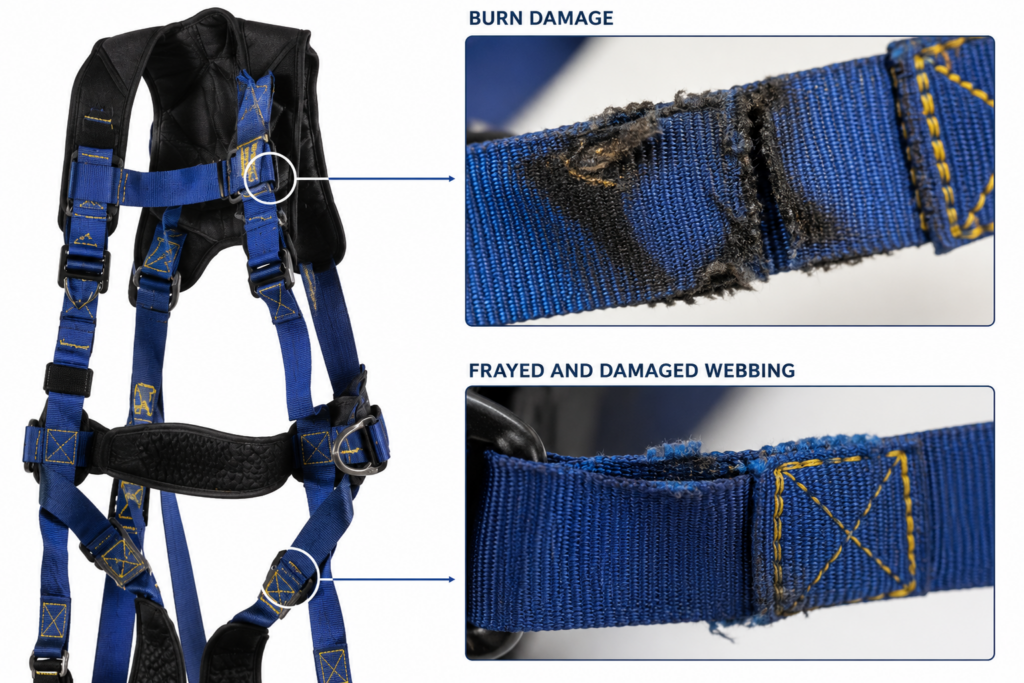
The webbing is often the first place signs of wear or damage become noticeable. As you inspect the harness, consider looking for:
- Cuts, tears, or punctures
- Frayed edges
- Excessive abrasion
- Broken or pulled stitches
- Burns from heat or welding
- Chemical damage
- Paint, concrete, or other materials that may conceal damage
- UV degradation or excessive fading
Sometimes damage is obvious. Other times it requires slowing down and carefully running the webbing through your hands to feel for irregularities.
Hardware
Metal components should move freely while remaining secure. Inspect items such as:
- D-rings
- Buckles
- Grommets
- Adjustment hardware
- Quick-connect buckles
Look for:
- Proper function
- Cracks
- Bending or distortion
- Corrosion
- Sharp edges
- Excessive wear
- Missing components
Labels
One item that’s easy to overlook is the manufacturer’s label.
If the label is missing or no longer legible, it may be difficult or impossible to verify the model, applicable standards, inspection guidance, or manufacturing information. Many manufacturers recommend removing equipment from service if identification labels can no longer be read.
Has the Harness Been Involved in a Fall?
One of the most important questions to ask is whether the harness has been subjected to fall arrest forces.
In many cases, if a harness has arrested a fall, the manufacturer recommends removing it from service immediately, even if no visible damage is present. The forces generated during a fall can affect the integrity of the equipment in ways that aren’t immediately visible during a visual inspection.
In addition, OSHA specifies in 29 CFR 1926.502.(d)(19) that personal fall arrest systems and components subjected to impact loading shall be immediately removed from service and shall not be used again for employee protection until inspected and determined by a competent person to be undamaged and suitable for reuse.
When in doubt, consult the manufacturer’s instructions before placing the equipment back into service.
When Should a Harness Be Removed from Service?
This is one of the most common questions asked.
While every situation is unique and manufacturers’ recommendations should take precedence, it may be appropriate to remove a harness from service if you observe:
- Cuts or tears in the webbing
- Broken or loose stitching
- Burn damage
- Chemical deterioration
- Cracked or deformed hardware
- Evidence the harness has arrested a fall
- Missing or illegible identification labels
- Improperly functioning hardware
- Damage that cannot be confidently evaluated
One simple rule has served many safety professionals well over the years:
If you have to question whether the harness is safe to use, it’s worth taking a closer look before putting it back into service and erring on the side of caution. Replacing a harness is almost always less costly than accepting unnecessary risk.
Documentation Matters Too
Many organizations document periodic harness inspections so they can demonstrate equipment has been evaluated, identify recurring issues, and track when equipment has been removed from service.
Digital inspection tools can simplify this process by allowing inspectors to complete checklists, attach photographs, document deficiencies, and track corrective actions from the field.
Just as importantly, digital records are much easier to retrieve than paper inspection forms when questions arise later.
Building Consistency into Your Fall Protection Program
A successful fall protection program involves much more than inspecting equipment.
Employees should receive appropriate fall protection training, understand when fall protection is required, know how to properly inspect and adjust their equipment, and feel comfortable reporting damaged gear without hesitation.
When inspections become a routine part of the workday and not simply another item on a checklist, organizations are better positioned to identify issues before they become incidents.
How WorkerSafe Can Help
WorkerSafe helps organizations simplify equipment inspection programs by replacing paper forms with digital inspections that can be completed from a mobile device.
Safety professionals can document harness inspections, attach photos, assign corrective actions, and maintain inspection records in one centralized platform alongside employee training, toolbox talks, and other safety documentation.
While no software replaces proper training or manufacturer guidance, having a consistent inspection process makes it easier to keep equipment records organized and support a proactive approach to fall protection.
A Consistent Process Helps Protect Your Team
Fall protection harness inspections don’t have to be complicated, but they do need to be consistent.
Taking a few extra minutes to carefully inspect equipment, following the manufacturer’s recommendations, documenting periodic inspections, and removing questionable equipment from service when appropriate can help reduce risk and strengthen your overall fall protection program.
At the end of the day, the goal isn’t simply checking a box for compliance, it’s helping ensure every worker has equipment they can trust when they need it most.